
Mountain disasters will become increasingly frequent. To assure the safety of the local population, a dual approach should be adopted: monitoring of the phenomena and the socio-economic fragilities.
Climate Change Adaptation Types in Alpine Winter Tourism Destinations: Differentiating Incremental, Transformative, Autonomous and Planned Adaptions in Balderschwang, Germany
In this paper, we apply two conceptual frameworks from climate change adaptation research to the case of Balderschwang, an alpine winter destination in Bavaria, Germany. We analyse climate change adaptation measures both in terms of the depth of intervention and the actors introducing and managing the adaptation.

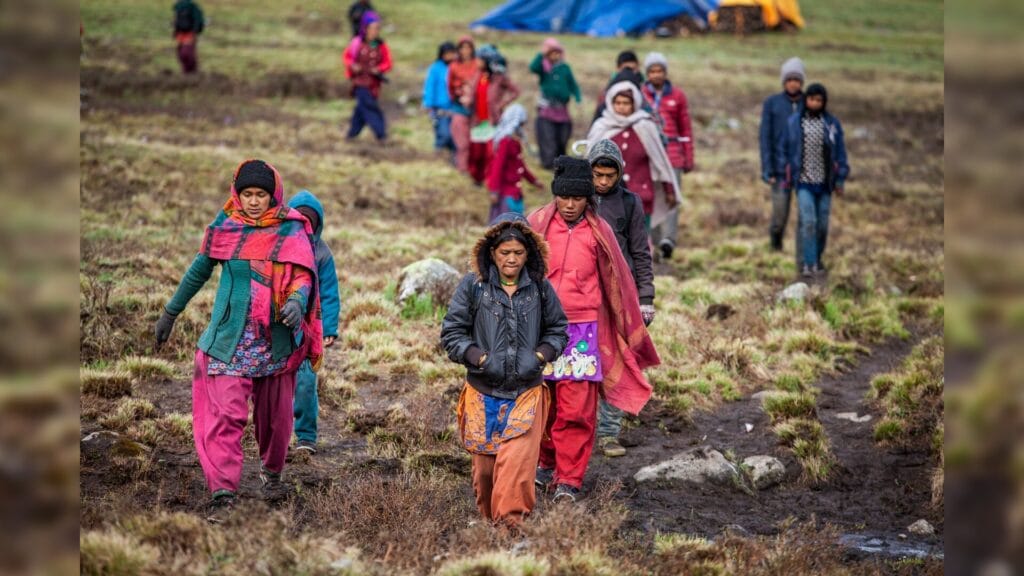
Complex risks from climate extremes to mountain pastoral systems conservation: leveraging community-perceived impacts and satellite remote sensing assessment
ExtreMo focuses on establishing empirical understanding on locally perceived impacts of extreme drought on the productivity and conservation of mountain pastoral systems.
Third Pole Archives: Dendroclimatic Potential of Unexplored High-Altitude Alpine Flora in a Changing Climate
This study investigates high-altitude shrubs from the Third Pole–Himalaya, emphasizing their dendroclimatic potential and insights into climate change impacts on sensitive mountain ecosystems.
Try to work with disturbances : Bark beetle outbreak consequences on French Alps forest workers facing ecological transition and profitability injunctions.
This paper analyses the impact of bark beetle outbreaks on mountain forest workers, already facing ecological transition and profitability injunctions, through a social science based investigation.
From Risk to Vision: Participatory Foresight for climate resilience in South Tyrol
Mountain-top bird species face extreme conditions, shaping breeding site selection. We monitored alpine nests in temperate Andes. Rock cavities buffer temperatures, potentially enhancing breeding success and adaptation to harsh weather