
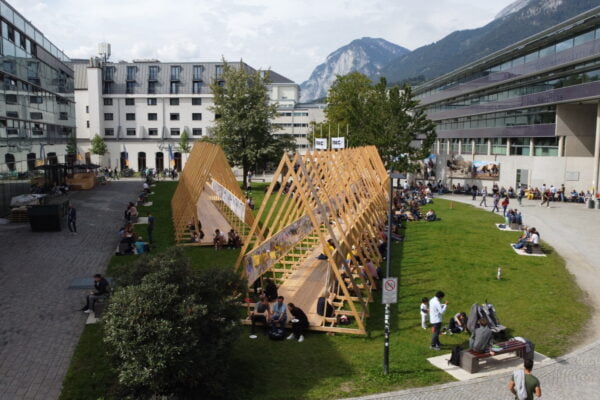
NAME:
SOWI - Garden
BUILDING:
SOWI
FLOOR:
0
TYPE:
Garden
CAPACITY:
2000
ACCESS:
Public Access
EQUIPMENT:
---
The Himalayan water tower, vital to 240 million people, faces a growing threat as glaciers in the region are thinning and retreating rapidly in recent decades. This thinning is driven by accelerated warming at higher elevations, strongly influenced by topography, and mass balance sensitivity that accelerate melt. This glacier recession, persistent thinning, and rising regional Equilibrium Line Altitude (ELA) are increasingly intersecting the steep icefalls and driving glacier disconnection and fragmentation in the region. However, studies on the drivers and glaciological impacts of these processes remain scarce. This study attempts to bridge this research gap by quantifying the timing and occurrence of glacier disconnection and fragmentation, their drivers and impacts on ice masses in the Himalaya. We employ high-resolution satellite imagery to conduct a multitemporal structural, glaciological, and geomorphological analysis in the Langtang Catchment, Nepal Himalaya from 1964–2023, to study this. Here we present preliminary findings on glacier evolution in Langtang Catchment including changes in glacier surface area, structural and geomorphological features (e.g., crevasses, icefalls, exposed bedrock, moraines, trimlines, debris cover, proglacial lakes, and supraglacial ponds). This multitemporal mapping provides key insights into flow regimes and glacier dynamics while identifying the processes behind glacier fragmentation and disconnection. We also show how fragmentation and disconnection impact glacier mass balance and surface flow velocity using long-term mass balance and surface velocity data from regional studies on Himalayan glaciers. The findings from this study will be useful in improving our ability to accurately predict both near and long- term glacier behaviour and evolution in the region. This is crucial for assessing future meltwater availability, sustainable water resource management, and preparedness for increasing cryospheric hazards.
We and use cookies and other tracking technologies to improve your experience on our website. We may store and/or access information on a device and process personal data, such as your IP address and browsing data, for personalised advertising and content, advertising and content measurement, audience research and services development. Additionally, we may utilize precise geolocation data and identification through device scanning.
Please note that your consent will be valid across all our subdomains. You can change or withdraw your consent at any time by clicking the “Consent Preferences” button at the bottom of your screen. We respect your choices and are committed to providing you with a transparent and secure browsing experience.