
How do indigenous territories and agroecology connect to each other in practice ? Networks are different but can be connected when agroecological principles are adapted to indigenous contexts.
Unveiling the anthropogenic causes affecting termite habitats in Shiwalik Himalayas, Uttarakhand, India.
Termites are key indicator species to enhance biodiversity and playing important role as ecosystem service providers. Species is declining fast due to various anthropogenic pressures in the habitat.
How do agrarian transitions affect rural incomes? Insights from a mountainous borderland region in northern Vietnam and Laos
This paper presents an analytical framework that elucidates the cross-scale, spatiotemporal, and multidimensional processes of agrarian transitions and their effects on local livelihoods.
Cooperatives´ contribution to resiliency of alpine family farming in South Tyrol
I am goingo to explain how cooperatives are a key factor in assuring resiliency in cases of market shocks and instabilities as well as shortcuts deriving from a lower independency in farm managem.
Building Climate-Resilient Livelihoods and Sustainable Development: Action Research for Local Empowerment in Central Himalayan (Uttarakhand) Region through an Ecosystem Approach
The study integrates climate resilience with sustainable livelihoods in Uttarakhand,using local knowledge and community-driven initiatives like agroforestry and ecotourism to enhance adaptation
… Because it’s enough: Sufficiency in high alpine dairy farming
We explore sufficiency as resilience capacity in mountain farming, working with examples of milking technology and alpine cheese-making, meadow management and barn construction.
Weaving Bioregional Material Networks – Circular Valorisation of Alpine Sheep Wool for a Regenerative Economy
Exploring how bioregional production-networks can transform European sheep wool into a valuable resource through localized valorisation strategies in order to identify context-sensitive applications.
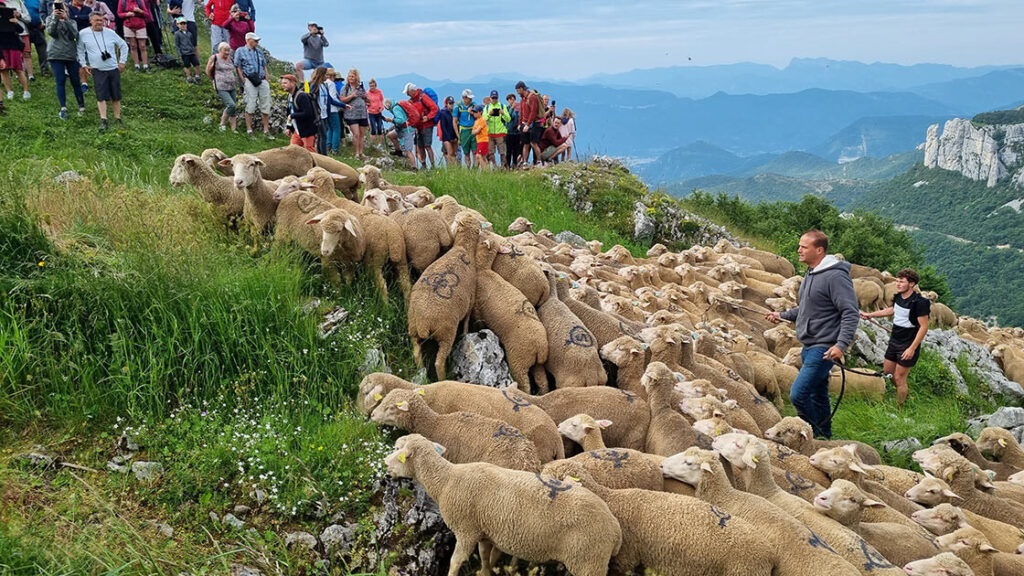
The relational resilience of hill and high country farming in Aotearoa / New Zealand
Mountain farming in New Zealand faces climate, market, and regulatory pressures. Resilience emerges through social networks, adaptive management, and diversification.
Mountain-lowland research: Jack D. Ives’ legacy and Andean insights
Jack Ives examined the mountain-lowland interactions within the Asian regional context. My research was focussed on the Ecuadorian Sierra.