NAME:
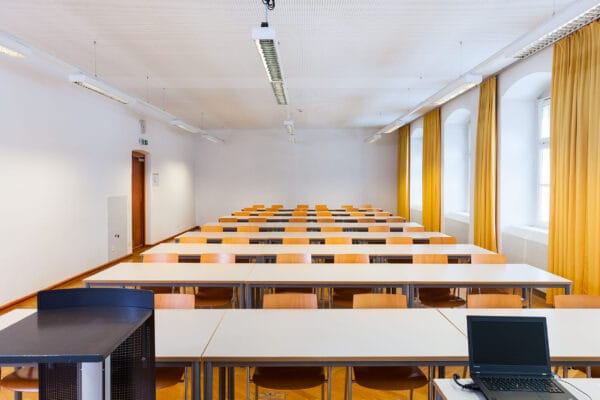
Theologie – SR VI
BUILDING:
Theologie
FLOOR:
1
TYPE:
Seminar Room
CAPACITY:
48
ACCESS:
Only Participants
EQUIPMENT:
Beamer, PC, WLAN (Eduroam), Overhead, Flipchart, Blackboard, Handicapped Accessible, LAN, Speaker Desk
Since they connect the past, present and future of a territory, heritage landscapes have an inescapable instrumental dimension. As such, they can be regarded by decision-makers and agents of institutionalized culture as a vector for conveying new territorial visions and practices, as it happened between 2020 and 2023 in an Occitan-speaking valley of the Italian Western Alps. Here, the reduced light pollution and low level of infrastructure resulting from long-standing depopulation trends represented the starting point of a process of heritage-making. Promoted by the valley’s mayors and by the local Ecomuseum, the UNESCO Heritage of Astronomy inscription aimed, by raising an astronomically-aware culture and preserving mountain dark skies, to revitalise the local economy through innovative and sustainable mountain practices (scientific dissemination, astro-tourism, astronomical education, etc…). Nevertheless, discrepancies between such project and previous practices of landscape stewardship finally resulted in the abandonment of the heritagisation process. Moving from the author’s personal involvement in this UNESCO inscription (Orlandi 2021), this paper will explore the reasons pushing some members of an Alpine ethnic minority to resist and contest heritage-making projects. In particular, by considering the contradictions between authorized heritagisation practices (Smith 2006) and community expectations, it will explore how multi-scale frictions within the UNESCO governance (Bortolotto 2013) can result from the articulation of non-dominant understandings of Alpine landscape with heritage-related forms of expertise and know-how. More broadly, by ethnographically unfolding the material, discursive and institutional settings of a UNESCO inscription, this paper aims to contribute to analytically explore affects, meanings and landscape practices attached to heritage (un)making in mountain areas.
We and use cookies and other tracking technologies to improve your experience on our website. We may store and/or access information on a device and process personal data, such as your IP address and browsing data, for personalised advertising and content, advertising and content measurement, audience research and services development. Additionally, we may utilize precise geolocation data and identification through device scanning.
Please note that your consent will be valid across all our subdomains. You can change or withdraw your consent at any time by clicking the “Consent Preferences” button at the bottom of your screen. We respect your choices and are committed to providing you with a transparent and secure browsing experience.