
NAME:
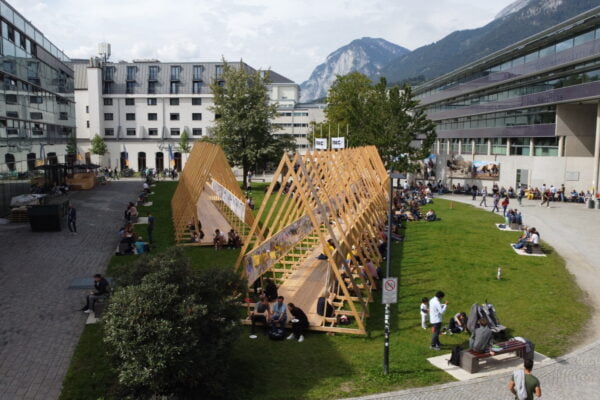
SOWI - Garden
BUILDING:
SOWI
FLOOR:
0
TYPE:
Garden
CAPACITY:
2000
ACCESS:
Public Access
EQUIPMENT:
---
Mountain hay meadows are valuable elements of the alpine cultural landscape that need an extensive management. Due to this management, they are a refuge for high biodiversity and also provide several ecosystem services, such as protection against natural hazards. They also play an important role in cultural heritage, traditions and in tourism. Last but not least, they produce high quality fodder for agricultural production. These multiple functions make it all the more regrettable that mountain hay meadows have been disappearing for several decades, either because of intensification or underuse and abandonment. As a result, they are protected under EU nature conservation legislation and are listed in Annex I of the Habitats Directive. However, recent assessments show that the current conservation status of mountain meadows in Europe is poor. This raises the question of how this habitat type can be preserved in the future and what factors play hereby a crucial role. To help answer this question, a Q-study was conducted with participants from different stakeholder groups relevant to mountain hay meadows in two regions of Austria (Tyrol and Carinthia) to identify particular viewpoints on the question “what matters for the future of mountain hay meadows”. The Q-method is an established semi-quantitative approach in which participants rank a number of statements that comprehensively represent a discourse on a particular topic. An inverted factor analysis of the statements allows the identification of viewpoints. The sample of participants was based on stakeholder mapping and included participants from different sectors (agriculture, nature conservation, tourism, decision makers, etc.) from the local to the national level. A total of 37 people participated. The results indicate that multiple heterogeneous viewpoints exist. Each emphasizes different factors that are important for the future of mountain hay meadows. One viewpoint focuses more on economic aspects, while others focus on cultural heritage or climate adaptation. The findings help to better understand the factors that hinder and promote the conservation of mountain hay meadows, as well as the conflicts and debates between different stakeholders in this regard. These findings can be used to develop appropriate conservation strategies in the future.
We and use cookies and other tracking technologies to improve your experience on our website. We may store and/or access information on a device and process personal data, such as your IP address and browsing data, for personalised advertising and content, advertising and content measurement, audience research and services development. Additionally, we may utilize precise geolocation data and identification through device scanning.
Please note that your consent will be valid across all our subdomains. You can change or withdraw your consent at any time by clicking the “Consent Preferences” button at the bottom of your screen. We respect your choices and are committed to providing you with a transparent and secure browsing experience.