
NAME:
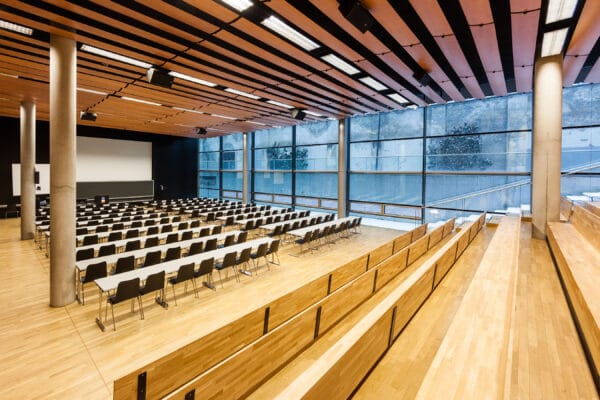
SOWI - Aula
BUILDING:
SOWI
FLOOR:
0
TYPE:
Assembly Hall
CAPACITY:
450
ACCESS:
Only Participants
EQUIPMENT:
Beamer, PC, WLAN (Eduroam), Overhead, Flipchart, Blackboard, Sound System, Handicapped Accessible, Microphones, Light Installation

The disaster that occurred in Blatten has raised attention on mountain hazards but also on their impacts on the local population. Moreover, it represented a textbook case of a cascading event.
The event has been monitored since its very beginning, allowing Swiss authorities to minimize the death toll by evacuating the village. Concerning data on the event, the Swiss rapid mapping service provided several image series allowing the processing of multitemporal DEMs and the computation of DoDs, a valuable resource so rapidly assessing the event magnitude and mapping its effects. The case poses several questions regarding similar events in other, less or poorly managed, mountain ranges. Firstly, the early detection of a phenomenon is challenging and, if the area lacks a proper technical structure to cope with mountain risks, the use of remote sensing techniques is the only feasible way to target the issue; a multi-sensor approach merging the potentialities of interferometric and multispectral sensors should be preferred. Then, if feasible, the activation of ground-based monitoring procedures should be encouraged. The same method should be applied in the aftermath and post-emergency phase, too.
On the other hand, the management of the local population is equally challenging. First of all is necessary to assess its vulnerabilities in terms of socio-economic features (e.g., social fragility, abandonment, commuting, etc.) and how the event can worsen them. This analysis should be carried out by leveraging existing governmental or, if unavailable, from international organizations’ surveys, databases, to reduce the chance of the abandonment of the area after the event and to carefully plan interventions to support the impacted population with subsidies, maintenance, restorations, etc.
As the frequency of similar events is rising, it is highly recommended that these preventive actions be carried out by governments to cope properly with the phenomenon and safeguard the mountain population, ensuring the inhabiting of mountain areas.
We and use cookies and other tracking technologies to improve your experience on our website. We may store and/or access information on a device and process personal data, such as your IP address and browsing data, for personalised advertising and content, advertising and content measurement, audience research and services development. Additionally, we may utilize precise geolocation data and identification through device scanning.
Please note that your consent will be valid across all our subdomains. You can change or withdraw your consent at any time by clicking the “Consent Preferences” button at the bottom of your screen. We respect your choices and are committed to providing you with a transparent and secure browsing experience.