
NAME:
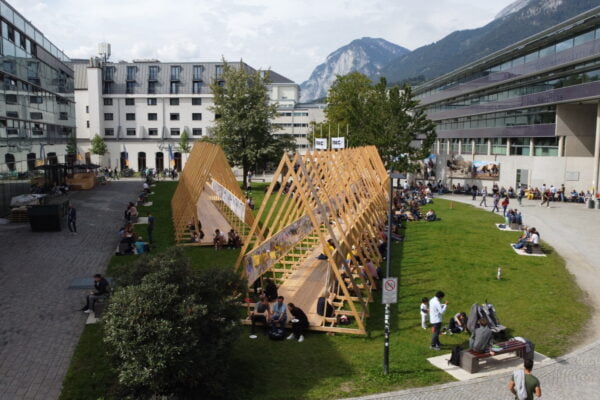
SOWI - Garden
BUILDING:
SOWI
FLOOR:
0
TYPE:
Garden
CAPACITY:
2000
ACCESS:
Public Access
EQUIPMENT:
---
Regional climate is affected by a wide variety of aerosols which modify through their radiative effects the precipitation distribution. In this article, the effects of aerosols, mainly dust aerosols on diurnal cycle of precipitation amount, frequency and intensity are investigated over central Africa by using the latest version of the Abdu Salam ICTP regional climate model coupled with the Community Land Model 4.5 as land surface scheme. Two sets of experiments have been conducted (one with aerosols interaction with dynamics and thermodynamics processes and another without this interaction) for a 10-year study period (2002–2011) and the Fourier transformation is used to study the 24-h cycle. In order to clearly understand spatial differences in RegCM experiments over central Africa, three subregions have been considered according to their land cover and climate characteristics. Our results indicate that the pattern of simulated aerosol optical depth (AOD) is well represented particularly northward of the study region compared to AOD from moderate resolution imaging spectroradiometer (MODIS) even if some differences in terms of magnitude are reported. The aerosols’ effects on diurnal cycle are generally not similar to those found in the amplitude and phase. The result pointed out that over the Sahelian region, atmospheric aerosol in general and dust in particular always induced a positive effect on diurnal cycle (increase the magnitude of the cycle) of precipitation intensities and in precipitation amount and precipitation frequency as well. But, the change is opposite in terms of amplitude and peak time over some subregions. It appears that the forcing of aerosols in solar radiation as well as in latent heat flux leads to the changes in the amplitude of the precipitation amount during the DJF and JAS seasons particularly during daytime. The changes in amplitude of the precipitation frequency are not consistent even if the corresponding phase always tends to increase by up to 5 h.
We and use cookies and other tracking technologies to improve your experience on our website. We may store and/or access information on a device and process personal data, such as your IP address and browsing data, for personalised advertising and content, advertising and content measurement, audience research and services development. Additionally, we may utilize precise geolocation data and identification through device scanning.
Please note that your consent will be valid across all our subdomains. You can change or withdraw your consent at any time by clicking the “Consent Preferences” button at the bottom of your screen. We respect your choices and are committed to providing you with a transparent and secure browsing experience.