
NAME:
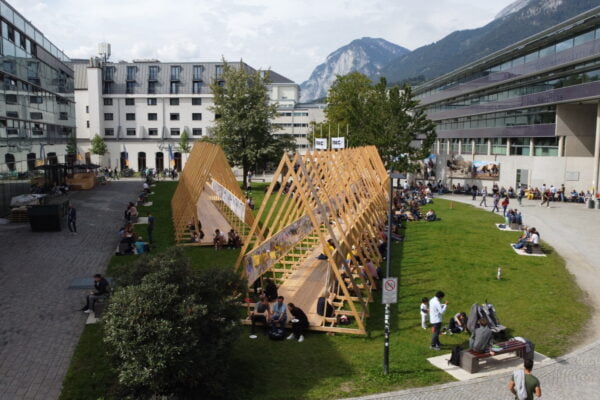
SOWI - Garden
BUILDING:
SOWI
FLOOR:
0
TYPE:
Garden
CAPACITY:
2000
ACCESS:
Public Access
EQUIPMENT:
---
Global climate change is accelerating melting in various mountain regions around the world, raising concerns about the impact this will have on water resources. The objective was to model the hydro-glaciological dynamics of the Llaca micro-basin under different climate change scenarios for the period 2026-2050. Runoff and glacier melt dynamics were evaluated in the Llaca micro-basin in the Cordillera Blanca mountain range in Peru, applying the semi-distributed conceptual approach with the GSM (Glacier Snow Melt) and SOCONT (Soil Contribution) models, which integrate hydro-glaciological processes in glacial and non-glacial areas. Two periods were considered: baseline (2018–2021) and future (2026–2050) with climate change scenarios SSP1 2.6 and SSP5 8.5, using daily temperature and precipitation data. In the 4-year base period, the Llaca glacier, with an area of 3.67 km², experienced ice melt of 5,576,353 m³, and the highest monthly contribution of meltwater flow occurred in November (wet season) and August (dry season). Future scenarios predict that the Llaca glacier, according to the 10 CMIP6 models, will lose much of its ice mass, becoming runoff in August 2049 for the SSP5 8.5 scenario, while for the SSP1 2.6 scenario, part of its ice mass will be preserved. This result warns that, without the presence of glacial mass (ice and snow) in the SSP5 8.5 scenario, there will be a 25% reduction in flow compared to the base period, which will affect the water supply for agricultural and population use in the coming decades.
We and use cookies and other tracking technologies to improve your experience on our website. We may store and/or access information on a device and process personal data, such as your IP address and browsing data, for personalised advertising and content, advertising and content measurement, audience research and services development. Additionally, we may utilize precise geolocation data and identification through device scanning.
Please note that your consent will be valid across all our subdomains. You can change or withdraw your consent at any time by clicking the “Consent Preferences” button at the bottom of your screen. We respect your choices and are committed to providing you with a transparent and secure browsing experience.