
NAME:
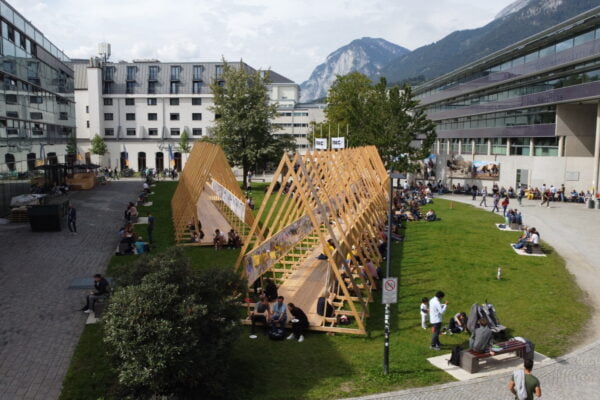
SOWI - Garden
BUILDING:
SOWI
FLOOR:
0
TYPE:
Garden
CAPACITY:
2000
ACCESS:
Public Access
EQUIPMENT:
---
Mountain regions are recognised as climate change hotspots, with strong evidence of Elevation-Dependent Warming (EDW), i.e., a stratification of warming rates with elevation. The key drivers of EDW have been studied using observations and model simulations and are well documented in the literature. However, less attention has been given to how EDW manifests itself when temperature extremes are considered, and to the possible drivers of elevational changes in extreme temperature trends.
This study investigates EDW in temperature extremes in the Greater Alpine Region (GAR, 4-19°E, 43-49°N), using indices of extreme warming or cooling as defined by the Expert Team on Climate Change Detection and Indices (ETCCDI) . The analysis is performed using the ERA5 reanalysis and the observation-based E-OBS dataset, both with a grid resolution of 0.25°, covering the period 1950–2024 and allowing for capturing spatial variability across different geographical subregions of the GAR. Our analysis shows that ETCCDI indices related to warm and cold temperature extremes exhibit different behaviors when looking at the elevational stratification of their trends suggesting different mechanisms that have been investigated as potential drivers.
We and use cookies and other tracking technologies to improve your experience on our website. We may store and/or access information on a device and process personal data, such as your IP address and browsing data, for personalised advertising and content, advertising and content measurement, audience research and services development. Additionally, we may utilize precise geolocation data and identification through device scanning.
Please note that your consent will be valid across all our subdomains. You can change or withdraw your consent at any time by clicking the “Consent Preferences” button at the bottom of your screen. We respect your choices and are committed to providing you with a transparent and secure browsing experience.