NAME:
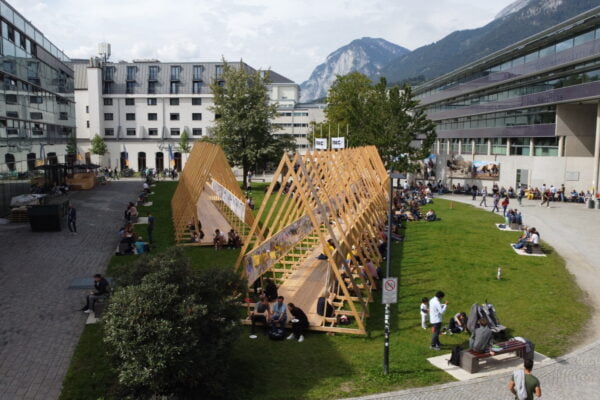
SOWI - Garden
BUILDING:
SOWI
FLOOR:
0
TYPE:
Garden
CAPACITY:
2000
ACCESS:
Public Access
EQUIPMENT:
---
Climate change has accelerated the loss of glacial mass in tropical regions, compromising water availability and increasing the risks for ecosystems and communities that depend on these resources. Tropical glaciers play a critical role in regulating water, providing essential flows during the dry season. The progressive reduction of glacier volume threatens water security, especially in regions where these glaciers constitute a primary source of water, affecting the supply for human consumption, agriculture and hydroelectric generation in the coming decades. The objective of this research was to evaluate the influence of glacier retreat on water availability in the Quillcay River hydrographic unit under CMIP6 climate scenarios (SSP126 and SSP585) for the period 2000-2050. Using GIS and remote sensing, a multitemporal analysis was performed using Landsat 5-8 satellite images and glaciological modeling using GlabTop and OGGM to estimate changes in glacier area, thickness and volume. The results show a significant reduction in the volume of water contained in the glaciers of the Quillcay River hydrographic unit. By 2050, the Palcaraju, Tullparaju and Shallap glaciers would lose between 26% and 64% of their current volume. In the low-emission scenario (SSP126 – MRI-ESM2-0), the water volume of Palcaraju would be reduced by 26% (118.15 Mm³), while in the most extreme scenario (SSP585 – UKESM1-0-LL-f2), the reduction would reach 64% (58.18 Mm³). Similarly, Tullparaju would lose between 69% and 90% of its water volume, and Shallap between 50% and 87%. This loss of glacial mass will directly impact the water regulation of the Quillcay River, reducing water supply in the dry season and increasing flows in the wet season due to greater early melting. Glacier retreat will have a direct impact on water availability, increasing the vulnerability of water systems in the coming decades. Projections suggest the need to plan adaptation and water management strategies to mitigate the effects of climate change on populations that depend on the water resources of the hydrographic unit.
We and use cookies and other tracking technologies to improve your experience on our website. We may store and/or access information on a device and process personal data, such as your IP address and browsing data, for personalised advertising and content, advertising and content measurement, audience research and services development. Additionally, we may utilize precise geolocation data and identification through device scanning.
Please note that your consent will be valid across all our subdomains. You can change or withdraw your consent at any time by clicking the “Consent Preferences” button at the bottom of your screen. We respect your choices and are committed to providing you with a transparent and secure browsing experience.