
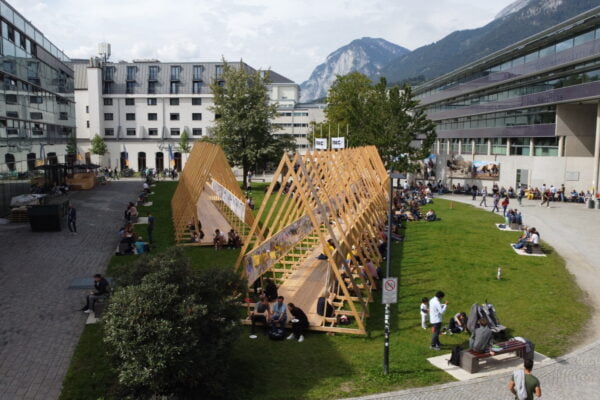
NAME:
SOWI - Garden
BUILDING:
SOWI
FLOOR:
0
TYPE:
Garden
CAPACITY:
2000
ACCESS:
Public Access
EQUIPMENT:
---
Himalayan cold deserts, including Lahaul-Spiti, Kinnaur, and Ladakh, are highly vulnerable to climate change-driven temperature increases. These high-altitude arid regions experience extreme temperatures and limited precipitation, making them particularly sensitive to fluctuations in dryness. Understanding long-term changes in aridity is essential for assessing climate change impacts and developing conservation strategies. This study evaluates aridity trends in Indian cold deserts from 1901 to 2022 using the Aridity Index (AI), defined as the ratio of annual precipitation (P) to potential evapotranspiration (PET). Data were sourced from CRU TS v4.08, a high-resolution climate dataset. The study area was classified into climatic zones based on AI values and analyzed across various seasons, including pre-monsoon, monsoon, post-monsoon, winter, and agricultural seasons. Findings indicate a significant decline in aridity across cold desert regions, with northeastern areas transitioning toward hyper-arid conditions. Seasonal variations were evident, with winter showing the most pronounced reduction in aridity due to the influence of western disturbances. The overall trend suggests a decline in dryness, as indicated by a positive AI trend slope over the observation period. In the rain shadow zone of Himachal Pradesh, cold desert regions are uniquely adapted to low precipitation due to their distinctive topography. However, increased precipitation in these areas may have adverse effects, such as soil erosion, destabilization of fragile landscapes, and landslides. Excess water can negatively impact native vegetation adapted to arid conditions, potentially causing root rot and a decline in plant health. Moreover, changes in precipitation can disrupt local ecosystems, altering species composition and threatening biodiversity. Local communities in these regions may face challenges related to infrastructure damage, shifts in agricultural practices, and heightened vulnerability to natural disasters. To mitigate these risks and ensure the long-term conservation of these fragile ecosystems, continuous monitoring and adaptive management strategies are crucial. Implementing sustainable land-use policies, promoting climate-resilient agricultural practices, and enhancing disaster preparedness will be essential in preserving the ecological and socio-economic stability of cold desert regions in Himachal Pradesh.
We and use cookies and other tracking technologies to improve your experience on our website. We may store and/or access information on a device and process personal data, such as your IP address and browsing data, for personalised advertising and content, advertising and content measurement, audience research and services development. Additionally, we may utilize precise geolocation data and identification through device scanning.
Please note that your consent will be valid across all our subdomains. You can change or withdraw your consent at any time by clicking the “Consent Preferences” button at the bottom of your screen. We respect your choices and are committed to providing you with a transparent and secure browsing experience.