NAME:
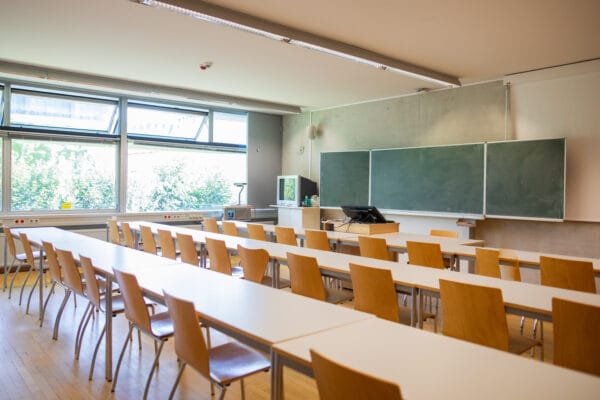
SOWI - SR 12
BUILDING:
SOWI
FLOOR:
3
TYPE:
Seminar Room
CAPACITY:
36
ACCESS:
Only Participants
EQUIPMENT:
Beamer, PC, WLAN (Eduroam), Overhead, Blackboard, Handicapped Accessible, LAN
Alpine mountain regions are increasingly confronted with the pressure of growing tourism flows, straining environmental, social, and infrastructural capacities, often framed as overtourism. While resource-based thresholds remain ambiguous, social acceptance among local communities and tourist groups provides a tangible entry point for governance and participatory design of institutional interventions. This paper presents a transdisciplinary research (TDR) approach to sustainable regional development in touristic alpine areas, asking how participation both within and beyond the project phase can ensure contextual relevance and lasting sustainable impact of TDR. The underlying project aims at developing measures validated through local participation in TDR. It integrates quantitative infrastructural data sources with institutional resource analysis to support data-enabled guidance for decision-making in three Swiss pilot destinations (STEPS – Smart Tourism Evaluation, Prediction and Sustainable Development).
The intervention focuses on enabling TDR on three levels of participation: working groups of the pilot destinations with relevant stakeholders (tourism, municipalities), supported by a regional sounding board and public engagement. Applied methods on the first level – including mapping, transect walks, and collaborative situation analysis – support inclusive problem framing and sharing of local knowledge in this first project phase.
Drawing on frameworks of the triad of participation and TDR for sustainable development, we derive qualitative indicators to assess process quality and participatory governance of this project phase, such as inclusiveness. With the help of network analysis, associated stakeholders’ interest and influence within the working groups are mapped.
Preliminary insights point to strong context-specificity from the lens of key stakeholders, yet public-level participation remains to be implemented, and long-term societal embedding requires a continued evaluation. Facilitating exchange on working group level as an organizational project tool turned out to be an effective bridge to bring key players together for collaboration on current and long-term perspectives.
This case contributes to growing empirical knowledge on how TDR and linked participation can support sustainability objectives in tourism-focused mountain regions and how these processes can be facilitated. Key lessons highlight the importance of structured participation design and of distinguishment between different levels of participation, as well as considering top-down vs. bottom-up approaches.