
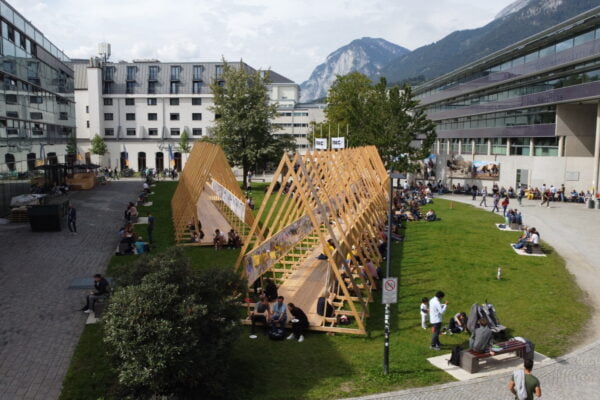
NAME:
SOWI - Garden
BUILDING:
SOWI
FLOOR:
0
TYPE:
Garden
CAPACITY:
2000
ACCESS:
Public Access
EQUIPMENT:
---
Soil microbial diversity plays a key role in ecosystem functioning, yet it may follow different patterns than above-ground biodiversity, e.g. when responding to disturbances. The central objective of this study is to investigate the impact of land use on soil microbial diversity and the relationship between it and that of plants and animals.
The study examines soil microbial communities across South Tyrol, Italy, by integrating data from Eurac’s Biodiversity Monitoring South Tyrol (BMS) with newly collected field data. Prokaryote and fungal diversity were assessed by high-throughput sequencing (16S rRNA and ITS). Statistical analyses explored relationships between soil microbial diversity, soil properties, and soil invertebrate, plant and grasshopper biodiversity across native, extensively managed and intensively managed landscapes.
Findings showed a disconnection between microbial and animal diversity across land-use intensities. Microbial and plant diversity were negatively associated, and prokaryote diversity was highest in intensively managed soils, challenging the idea that greater diversity indicates ecosystem health. Furthermore, plant and animal diversity appeared unrelated to microbial community composition, which varied distinctly across land-use intensities.
Soil microbial diversity responds to land use in complex and sometimes counter-intuitive ways, highlighting the need to further research and consider these responses in conservation, land management, and ecosystem modelling.
We and use cookies and other tracking technologies to improve your experience on our website. We may store and/or access information on a device and process personal data, such as your IP address and browsing data, for personalised advertising and content, advertising and content measurement, audience research and services development. Additionally, we may utilize precise geolocation data and identification through device scanning.
Please note that your consent will be valid across all our subdomains. You can change or withdraw your consent at any time by clicking the “Consent Preferences” button at the bottom of your screen. We respect your choices and are committed to providing you with a transparent and secure browsing experience.