
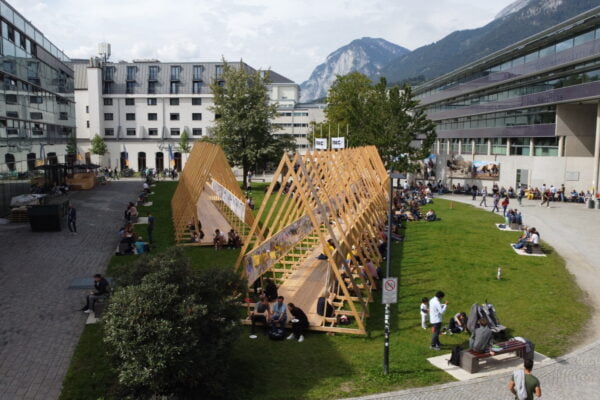
NAME:
SOWI - Garden
BUILDING:
SOWI
FLOOR:
0
TYPE:
Garden
CAPACITY:
2000
ACCESS:
Public Access
EQUIPMENT:
---
Anthropogenic climate change is driving rapid deglaciation in many mountain environments. This has implications for water security, sea level rise, and geohazards such as landslides and glacial lake outburst floods (GLOFs). In addition to posing hazards to human populations, such geohazards may also be important in controlling landscape evolution in regions transitioning from glacial to post glacial conditions. Nevertheless, this remains poorly understood. Analysis of a high resolution digital elevation dataset (ArcticDEM) is undertaken in order to better constrain rates of landscape evolution since the last glacial maximum (LGM) in the area surrounding the Greenland Ice Sheet. Metrics such as surface roughness, valley width, and valley depth are extracted and compared with an existing dataset of paleo ice sheet extent in order to determine whether a topographic signature exists for emerging post glacial landscapes. A comparison is also undertaken with reference to a mature post glacial landscape (the Scottish Highlands) in order to better understand the potential future evolution of such landscapes.
We and use cookies and other tracking technologies to improve your experience on our website. We may store and/or access information on a device and process personal data, such as your IP address and browsing data, for personalised advertising and content, advertising and content measurement, audience research and services development. Additionally, we may utilize precise geolocation data and identification through device scanning.
Please note that your consent will be valid across all our subdomains. You can change or withdraw your consent at any time by clicking the “Consent Preferences” button at the bottom of your screen. We respect your choices and are committed to providing you with a transparent and secure browsing experience.