
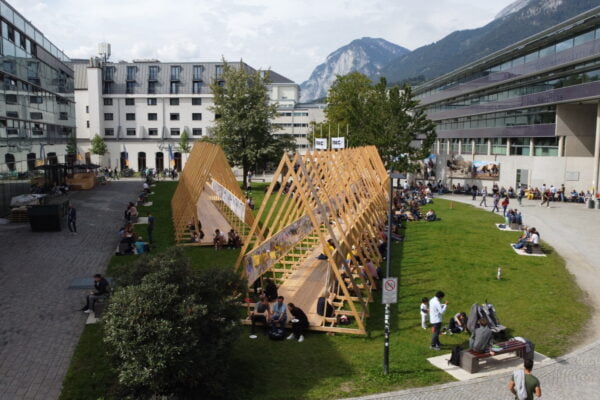
NAME:
SOWI - Garden
BUILDING:
SOWI
FLOOR:
0
TYPE:
Garden
CAPACITY:
2000
ACCESS:
Public Access
EQUIPMENT:
---
Recent climatic shifts are rapidly reshaping the environmental dynamics of polar and alpine regions, significantly impacting sensitive ecosystems in the Arctic and the Himalayas. These regions are experiencing unprecedented climatic fluctuations, challenging the resilience and adaptability of native flora. While dendroclimatological studies focusing on high-altitude trees in the Himalayas have been conducted extensively for decades, providing valuable insights into climate change impacts, their smaller counterparts—high-altitude shrubs—remain largely unexplored. Extensive research in the Arctic has demonstrated clear growth-ring formations in shrub species, revealing their sensitivity to environmental changes; however, similar research in the “Third Pole”—the high-altitude Himalayan zones—remains limited. This study extends dendroclimatic analyses to previously un-investigated shrub species found at elevations above 4000 m a.s.l. in the Indian Himalayas. Systematic sampling of approximately 150 plant specimens from five targeted shrub species, coupled with dendrochronological analyses, revealed distinct annual growth rings with clear boundaries, confirming their potential as reliable indicators of climatic variability. Preliminary results indicate that these shrub species accurately record annual climatic fluctuations, serving as valuable proxies for reconstructing past climate conditions and monitoring the recent impacts of global warming. Our initial findings underscore the significant yet untapped dendroclimatological potential of Himalayan high-altitude shrubs. Highlighting the ecological sensitivity and unique adaptive mechanisms of these species, this research advocates for further dendroclimatic studies and targeted conservation initiatives in the Himalayas, a critical biodiversity hotspot essential for understanding climate-driven ecological resilience and vulnerability.