

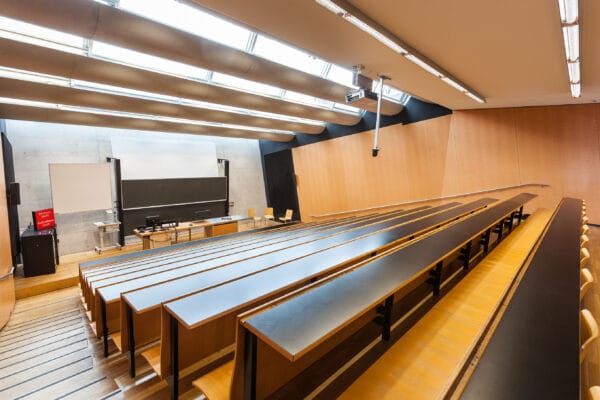
NAME:
SOWI - HS 1
BUILDING:
SOWI
FLOOR:
0
TYPE:
Lecture Hall
CAPACITY:
160
ACCESS:
Only Participants
EQUIPMENT:
Beamer, PC, WLAN (Eduroam), Overhead, Flipchart, Blackboard, Sound System, Handicapped Accessible, Microphones
Glaciers are crucial components of the Earth’s climate system and serve as indicators of climate change. Their substantial mass loss due to global warming significantly contributes to sea-level rise and impacts regional hydrology, downstream ecosystems and settlements. Despite considerable advancements in observational and modelling techniques, accurately quantifying glacier responses to climate change and predicting their future behaviour remain complex challenges, particularly in regions characterized by rapidly changing glaciers and complex topography. One of the key limitations in this field remains the availability of high-resolution regional datasets. In this study, we investigate the application of remote sensing data downscaling techniques to improve spatial and temporal resolution of glacial mass balance. We focus on the integration of relatively high-resolution surface elevation changes derived from satellite altimetry with coarse-resolution mass changes inferred from satellite gravimetry data to localize mass changes. This study mainly focuses on the glaciers of the Patagonia region. This region, characterized by rapid glacier retreat and complex climatic influences, serves as an ideal case study for integrating multiple satellite datasets and regional models. This approach aims to improve local assessments and provide a transferable framework for applying remote sensing downscaling in other regions where observational data is sparse. The findings contribute to advancing the use of satellite remote sensing for cryospheric studies and underscore the importance of high-resolution datasets in tracking and predicting glacial responses to climate change. Preliminary results highlight the potential of enhanced data integration techniques to resolve sub-regional mass changes, offering insights into glacier-climate interactions in Patagonia. The potential outcomes of this work aim to benefit the field of glacial modelling. The development of a downscaled glacial mass balance dataset, tailored for regional glacial systems or even individual glaciers, holds significant promise for model forcing and data assimilation to improve the estimates of future glacial melt and hydrological processes.
We and use cookies and other tracking technologies to improve your experience on our website. We may store and/or access information on a device and process personal data, such as your IP address and browsing data, for personalised advertising and content, advertising and content measurement, audience research and services development. Additionally, we may utilize precise geolocation data and identification through device scanning.
Please note that your consent will be valid across all our subdomains. You can change or withdraw your consent at any time by clicking the “Consent Preferences” button at the bottom of your screen. We respect your choices and are committed to providing you with a transparent and secure browsing experience.