NAME:
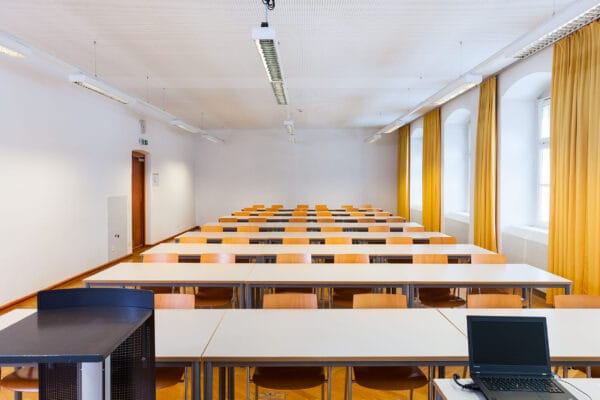
Theologie – SR VI
BUILDING:
Theologie
FLOOR:
1
TYPE:
Seminar Room
CAPACITY:
48
ACCESS:
Only Participants
EQUIPMENT:
Beamer, PC, WLAN (Eduroam), Overhead, Flipchart, Blackboard, Handicapped Accessible, LAN, Speaker Desk
During the period following the end of World War II, majority of mountain areas of the Czech borderland witnessed almost total population exchange connected with significant environmental, social and cultural transformations. With the transfer of the Czech Germans the continuity of its settlement, cultivation and interpretation of local landscapes was broken. In consequence, two major characteristics may be recognized that define contemporary borderland mountain areas: absences of continuity in cultivation, identity and tradition followed by transformation of former cultural landscapes into protected semi-natural environments; and ongoing attempts on revitalization and growing interest in the history of local cultural landscape, places and communities. Due to depopulation, settlement desertion, land abandonment and access restrictions, the character of large parts of the borderland mountain landscapes has changed extensively as well as the perception of its meanings and values due to latter establishment of national parks and protected landscape areas. Although local landscape transformations were rather complex and extreme, traces of former cultural landscapes have not been completely abandoned and forgotten. Their use has either continued or they have attracted attention through the material inertia of their remains and have become part of a culture of remembrance and imagination. Mountain landscapes in the borderland of Czechia are now thus in a unique position of being perceived and interpreted as part of the natural heritage of the state as well as cultural heritage of various local stakeholders and communities. The presentation therefore focuses on the discussion of the issues of management, protection and interpretation of local landscapes and of its role in the formation of regional heritage and identity in the context of its past transformations during the 20th century.
We and use cookies and other tracking technologies to improve your experience on our website. We may store and/or access information on a device and process personal data, such as your IP address and browsing data, for personalised advertising and content, advertising and content measurement, audience research and services development. Additionally, we may utilize precise geolocation data and identification through device scanning.
Please note that your consent will be valid across all our subdomains. You can change or withdraw your consent at any time by clicking the “Consent Preferences” button at the bottom of your screen. We respect your choices and are committed to providing you with a transparent and secure browsing experience.