
NAME:
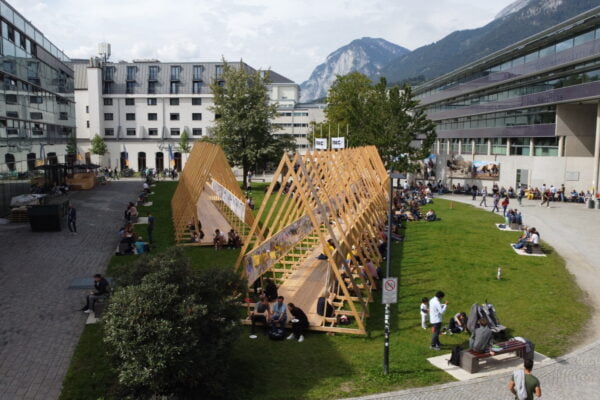
SOWI - Garden
BUILDING:
SOWI
FLOOR:
0
TYPE:
Garden
CAPACITY:
2000
ACCESS:
Public Access
EQUIPMENT:
---
The “Bundessportheim und Alpine Forschungsstelle der Universität Innsbruck” (Federal Sports Centre and Alpine Research Station of the University of Innsbruck) in Obergurgl was founded in 1951 and has a long research tradition in various scientific disciplines. Since 2000, a monitoring programme of abiotic factors and species composition of fauna and flora along an altitudinal gradient is one of the central duties of the Alpine Research Centre. It started with a five-year project founded by the Tyrolean Regional Government entitled “Langzeit-Ökosystem Monitoring im Alpinen Raum”. The main objectives of the project were: i) monitoring changes in species composition due to external stressors like climate change or pollution, ii) investigating the influence of land-use changes and iii) evaluating monitoring methods regarding their operability and reliability in high alpine conditions. The findings of this project were used to refine monitoring campaigns in later years. Due to the comprehensive experience of the staff and the already available data and infrastructure, the monitoring programme in Obergurgl was included in the recent research programme “Aktionsplan Biodiversität für Tirol” (Biodiversity Action Plan for Tyrol) funded by the Tyrolean Regional Government in which well-established monitoring programmes and projects where revisited after decades to evaluate the changes in biodiversity over time. The Biodiversity Action Plan for Tyrol is part of the “Biodiversitäts-Strategie Österreich 2030+” (Biodiversity Strategy Austria 2030+; Bundesministerium für Klimaschutz, Umwelt, Energie, Mobilität, Innovation und Technologie, 2022). Additionally, Obergurgl is a Long-Term Ecosystem Research (LTER) site. LTER is an international research network, that is currently undertaking efforts to evolve into a European Research Infrastructure. The participation in this process requires the monitoring of so-called standard observations from associated sites, some of them dedicated to measuring biodiversity. In future, this new development, combined with further monitoring duties form the Tyrolean Regional Government, should ensure further monitoring campaigns in Obergurgl and establish its importance for investigating biodiversity in alpine environments.
We and use cookies and other tracking technologies to improve your experience on our website. We may store and/or access information on a device and process personal data, such as your IP address and browsing data, for personalised advertising and content, advertising and content measurement, audience research and services development. Additionally, we may utilize precise geolocation data and identification through device scanning.
Please note that your consent will be valid across all our subdomains. You can change or withdraw your consent at any time by clicking the “Consent Preferences” button at the bottom of your screen. We respect your choices and are committed to providing you with a transparent and secure browsing experience.