
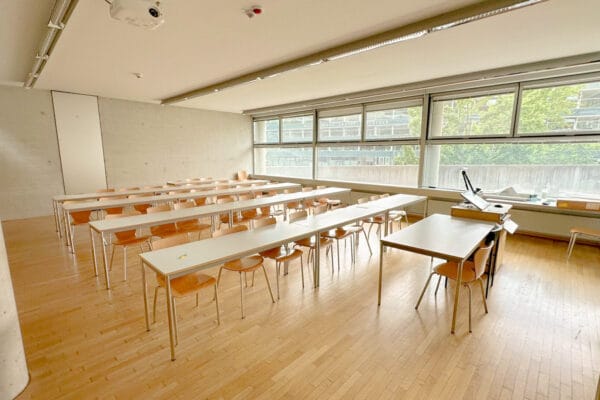
NAME:
SOWI - SR 1
BUILDING:
SOWI
FLOOR:
1
TYPE:
Seminar Room
CAPACITY:
35
ACCESS:
Only Participants
EQUIPMENT:
Beamer, PC, WLAN (Eduroam), Handicapped Accessible, LAN, Whiteboard, Speaker Desk
In the context of a global ecological crisis, the return of large carnivores in Europe calls for an urgent reconsideration of how we coexist with the rest of the living world. This presentation, based on a recently defended PhD thesis, explores interactions between pastoralism and brown bears in the French Pyrenees, examining how geographies of coexistence take shape. Focusing on three summer pastures— summer mountain grazing lands deeply shaped by human presence—this micro-local study investigates the role of bears, which reappeared in the 2000s after a long absence, in reshaping coexistence landscapes. To make both humans and non-humans visible, the research adopts an interdisciplinary, more-than-human, and multi-source methodology, combining camera traps, social surveys (interviews and observations), and institutional data analysis. These diverse materials reveal distinct trajectories of coexistence in the studied pastures. Since the bears’ return, human and non-human individuals have been encountering, adjusting, and intermingling, adapting within specific space-time contexts. Beyond a generic coexistence between bears and pastoralism, it is about the shared lives of Caramelles the bear and her cubs, Louis the shepherd, Eliane the livestock owner, Roca the guard dog, etc.—where all co-write multispecies stories in their summer pasture. This presentation showcases these findings through an illustrated collection of stories documenting encounters between pastoralist communities and bears, offering an intimate, lived perspective on coexistence. It also examines how human-bear relations differ from those with other wildlife already present in the mountains, as the bear then appears as an unpredictable and untouchable animal. Mountain pastures, as patches of multispecies entanglements, offer a compelling lens to rethink human connections with the living world beyond opposition and conflict. By highlighting the agency of bears in transforming anthropized landscapes into coexistence landscapes, this study thus sheds light on the place given to wildness in our society, as well as the need to approach coexistence as a patchy concept. More practically, it underscores the need to adapt conservation and conflict management strategies to the diversity of these shared places and the ways animals actively shape them.
We and use cookies and other tracking technologies to improve your experience on our website. We may store and/or access information on a device and process personal data, such as your IP address and browsing data, for personalised advertising and content, advertising and content measurement, audience research and services development. Additionally, we may utilize precise geolocation data and identification through device scanning.
Please note that your consent will be valid across all our subdomains. You can change or withdraw your consent at any time by clicking the “Consent Preferences” button at the bottom of your screen. We respect your choices and are committed to providing you with a transparent and secure browsing experience.