
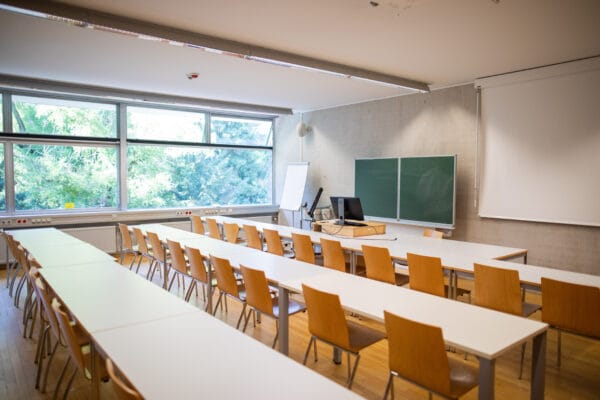
NAME:
SOWI - SR 11
BUILDING:
SOWI
FLOOR:
3
TYPE:
Seminar Room
CAPACITY:
36
ACCESS:
Only Participants
EQUIPMENT:
Beamer, PC, WLAN (Eduroam), Overhead, Flipchart, Blackboard, Handicapped Accessible, LAN
In the past decade, reflections on indigenous theories and practices of relations between humans and other-than-humans have been resonating also beyond sociocultural studies, reaching wider audiences, especially those connected to ecological activism. In the case of the Andean macro region, anthropologists and geographers have focused on indigenous “cosmopraxis” (De Munter 2016) based on ritual reciprocity and forms of “mutual rearing” (Bugallo, Tomasi 2012) between humans and other-than-humans, including plants, animals, meteorological phenomena, and the living entities of the mountain landscape, such as the rivers, the lakes, the holy mountains, and the “Mother Earth” or Pachamama. Drawing on ethnographic data we produced in Laguna Blanca, Northwest Andean Argentina, from the perspective of sociocultural anthropology and geography, we present, first, the practices of the “chaku,” the capture and shearing of wild vicunas, organized by the local artisans of the indigenous community together with the agents of the provincial department of Environment, with the participation of tourists too. Then, we focus on the ceremony of the ritual offering to Pachamama on 1st of August, which is celebrated by the inhabitants at both a familial and a community level, and which has been transformed into a festival open to tourists too in the past decade. In one case, we underline the dynamics of opposition between indigenous and non-indigenous theories and practices of relation between humans and other-than-humans. In the other, we suggest the emergence of an alliance among indigenous communities, social researchers, activists, and even tourists, as a new “cosmopolitical” arena, that includes environmental “Earth Beings” (de la Cadena 2010). This happens in a situation of high conflict due to the new governmental plan for mining development in Laguna Blanca, despite its status as a Biosphere reserve.
We and use cookies and other tracking technologies to improve your experience on our website. We may store and/or access information on a device and process personal data, such as your IP address and browsing data, for personalised advertising and content, advertising and content measurement, audience research and services development. Additionally, we may utilize precise geolocation data and identification through device scanning.
Please note that your consent will be valid across all our subdomains. You can change or withdraw your consent at any time by clicking the “Consent Preferences” button at the bottom of your screen. We respect your choices and are committed to providing you with a transparent and secure browsing experience.