

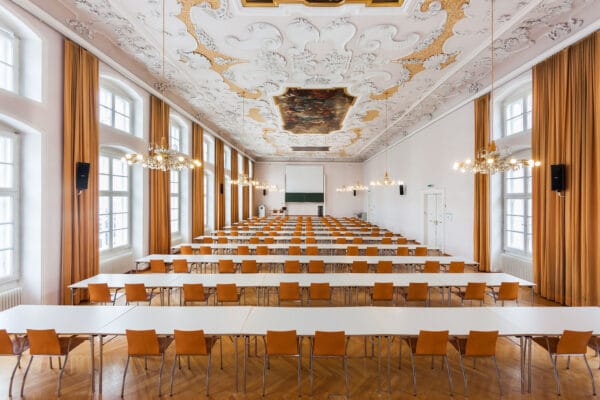
NAME:
Theologie - MS
BUILDING:
Theologie
FLOOR:
2
TYPE:
Lecture Room
CAPACITY:
108
ACCESS:
Only Participants
EQUIPMENT:
Beamer, PC, WLAN (Eduroam), Overhead, Flipchart, Blackboard, Handicapped Accessible, LAN, Microphones, Sound System
Dealing with the complex challenges of biodiversity loss and climate change requires deliberate transformation in social-ecological systems (SES) to protect biodiversity and ensure the sustained provision of Nature’s contributions to people (NCPs). This is particularly crucial in mountain areas, which harbor high biodiversity and provide critical NCPs to both upland and lowland communities, while these NCPs are shifting under climate and land use change. Nature-based solutions (NbS), implemented by change agents such as non-governmental organizations, represent promising catalysts to driving these transformations by reshaping human-environment relationships. However, the mechanisms by which NbS drive transformation and the role of SES transformative capacities remain poorly understood.
Our action research investigates how NbS change agents deliberately transform SES toward desirable mountain futures in two case studies: mountain communities in the Central Apennines, Italy, managing human-bear coexistence, and in the Cordillera Central, Peru, addressing climate change-related hazards and water scarcity. Specifically, we (1) evaluate the mechanisms through which NbS foster transformative changes within SES, (2) analyze SES network configurations as key transformative capacities supporting these processes, and (3) co-develop actionable Theory of Change strategies in collaboration with NbS change agents and stakeholders. Using a mixed-methods approach, we integrate participatory SES network mapping, interviews, and SES network analysis. Applying the Coupled Infrastructure Systems framework and SES network analysis, this research explores how NbS interventions reshape stakeholder interactions, the use and management of NCPs, alongside their influence on SES feedback dynamics. Finally, we explore how co-designing systemic Theory of Change with stakeholder committees can enhance transformative capacities, supporting effective, scalable, and equitable NbS initiatives that drive SES transformations towards desirable futures.
We and use cookies and other tracking technologies to improve your experience on our website. We may store and/or access information on a device and process personal data, such as your IP address and browsing data, for personalised advertising and content, advertising and content measurement, audience research and services development. Additionally, we may utilize precise geolocation data and identification through device scanning.
Please note that your consent will be valid across all our subdomains. You can change or withdraw your consent at any time by clicking the “Consent Preferences” button at the bottom of your screen. We respect your choices and are committed to providing you with a transparent and secure browsing experience.