

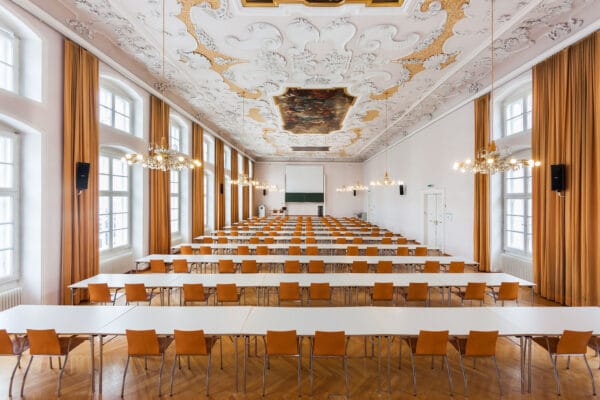
NAME:
Theologie - MS
BUILDING:
Theologie
FLOOR:
2
TYPE:
Lecture Room
CAPACITY:
108
ACCESS:
Only Participants
EQUIPMENT:
Beamer, PC, WLAN (Eduroam), Overhead, Flipchart, Blackboard, Handicapped Accessible, LAN, Microphones, Sound System
The European Alps are surrounded by highly urbanized areas that are located nearby vulnerable mountain landscapes. The transition areas between the mountainous core and peri-Alpine lowlands present a spatial context, where functional linkages and interdependencies are pronounced. Water supply to lowland populations and weekend tourism flows to mountain areas exemplify these connections. Despite their significance, interface areas remain an underexplored spatial category, with most studies focusing either on mountain or lowland areas. Our paper addresses this gap by conceptualizing and defining interface areas on a pan-Alpine scale. We pursue two key research objectives: (1) to define and analyze the spatial and functional characteristics of these areas, including their similarities and differences, and (2) to position them in relation to the more established categories of mountain and lowland areas. Our results reveal three spatial specificities of Alpine interface areas. First, interface areas show sharp contrasts with significant socio-economic and environmental differences in population density, ecological connectivity and recreational opportunities. Interface areas function as connectors, bridging the divide between high mountain regions and lowland urban areas. Second, interface areas act as geographic funnels, where spatial narrowing channels major transport and mobility flows through limited corridors. This results in hotspots of transport infrastructure demand. Third, policy implications arise from intense competition over limited land availability within interface areas. Strategic spatial development has to balance competing sectoral interests requiring multi-level governance and participatory processes. The recognition of Alpine interface areas as a specific spatial category provides a new lens for Alpine spatial development.
We and use cookies and other tracking technologies to improve your experience on our website. We may store and/or access information on a device and process personal data, such as your IP address and browsing data, for personalised advertising and content, advertising and content measurement, audience research and services development. Additionally, we may utilize precise geolocation data and identification through device scanning.
Please note that your consent will be valid across all our subdomains. You can change or withdraw your consent at any time by clicking the “Consent Preferences” button at the bottom of your screen. We respect your choices and are committed to providing you with a transparent and secure browsing experience.