
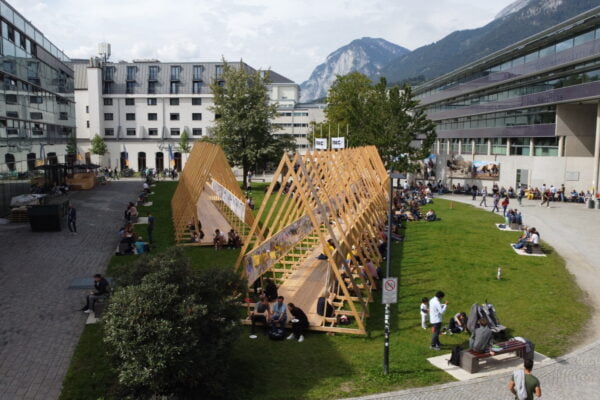
NAME:
SOWI - Garden
BUILDING:
SOWI
FLOOR:
0
TYPE:
Garden
CAPACITY:
2000
ACCESS:
Public Access
EQUIPMENT:
---
Human-wildlife conflict is a significant management challenge in India. Therefore, present study examines human-bear conflict in the Dhauladhar Wildlife Sanctuary, of Greater Himalayan range, revealed complex interactions between local communities and bears. Although conflicts are minimal in villages and forest fringes, livestock grazing within the sanctuary has led to brown bears being identified as the primary predators, with peak attacks occurring from May to November. Conversely, human attacks have only been reported involving black bears. While local perceptions largely support bear conservation; however, herders express dissatisfaction due to economic losses from livestock predation. The analysis shows that high-conflict zones with black bears correlate with human encroachment near village edges, whereas brown bear conflicts are more frequent in higher-altitude regions. Intensive camera trapping also highlighted the high livestock pressure within the sanctuary as a potential threat to bear populations and how the anthropogenic pressure in the sanctuary is impacting their activities. Significant livestock presence exacerbates human-bear conflicts and places considerable strain on the sanctuary’s ecosystems. Despite the substantial pressure, bears have largely abstained from venturing into villages. This behavior suggested that sanctuary remains a sustainable habitat for their survival. However, it raises critical questions about the threshold of livestock pressure that bears can tolerate before they are forced to seek alternative food sources. Thus, for developing effective management strategies to prevent potential conflicts and ensure the long-term sustainability of bear populations within sanctuary local stakeholders must be actively involved in developing conservation strategies that address their concerns about economic losses. In spite of these anthropogenic pressures, bears have largely abstained from venturing into human habitations. This may suggest that sanctuary area is a sustainable habitat for the survival of both bear species. However, this study further raising a critical question about the threshold of anthropogenic pressure that bears can tolerate before they are forced to seek alternative food sources. Therefore, to ensure the long-term sustainability of bears and to prevent human-bear conflicts, there is an urgent need for developing effective management strategies where local stakeholders must be actively involved.
We and use cookies and other tracking technologies to improve your experience on our website. We may store and/or access information on a device and process personal data, such as your IP address and browsing data, for personalised advertising and content, advertising and content measurement, audience research and services development. Additionally, we may utilize precise geolocation data and identification through device scanning.
Please note that your consent will be valid across all our subdomains. You can change or withdraw your consent at any time by clicking the “Consent Preferences” button at the bottom of your screen. We respect your choices and are committed to providing you with a transparent and secure browsing experience.