

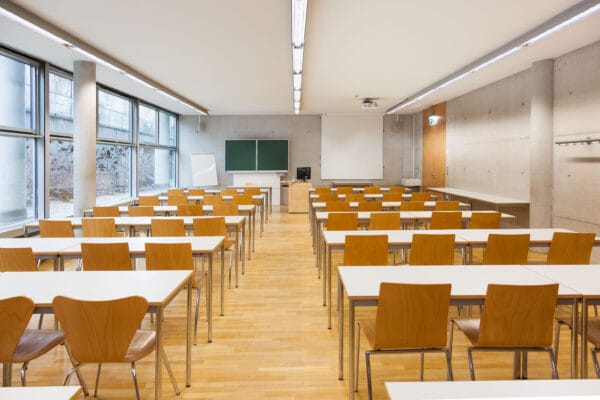
NAME:
SOWI - UR 3
BUILDING:
SOWI
FLOOR:
-1
TYPE:
Seminar Room
CAPACITY:
70
ACCESS:
Only Participants
EQUIPMENT:
Beamer, PC, WLAN (Eduroam), Overhead, Flipchart, Blackboard, Handicapped Accessible, LAN
Alpine glaciers are rapidly changing due to climate change. The rapid pace of change poses a significant challenge for cartographers, making it too labour-intensive to continuously update crevasse zone locations on hiking maps. However, accurate and up-to-date information on crevasse distribution is crucial for mountaineers and field researchers to ensure safe glacier traverses and mitigate crevasse falls. In particular, with the increasing likelihood of winters with low snow cover in the future, the number of crevasse accidents could double, as was the case in Switzerland in the winter of 2022. For the first time, this study introduces a novel glacier crevasse dataset for safer route planning. We developed an automated method for mapping Alpine glacier crevasses using high-resolution (20 cm) airborne remote sensing imagery and a multitask deep neural network. The model was trained and tested on data collected at the end of the ablation season from seven training areas and five test areas in the Ötztal and Stubai Alps. The model demonstrated robust detection of glacier crevasses of varying shapes and light conditions, reaching a balanced accuracy over 86 %. The model’s spatial and temporal transferability enabled the generation of glacier crevasse maps for the entire Ötztal and Stubai Alps as well as additional study sites around Großglockner, Großvenediger, Piz Palü and Ortler. For selected areas, we highlight changes in glacier crevasse zones by comparing previously mapped crevasse zones from existing hiking maps with the here presented dataset. Furthermore, these new crevasse datasets are currently being integrated into printed hiking maps to provide mountaineers and field researchers with up-to-date crevasse information for better route planning. Future research efforts could focus on automating the production of updated crevasse maps, synchronized with Austria’s three-year aerial photography cycles. Integrating this information into digital cartography tools would enhance accessibility and usability for mountaineers and researchers.
We and use cookies and other tracking technologies to improve your experience on our website. We may store and/or access information on a device and process personal data, such as your IP address and browsing data, for personalised advertising and content, advertising and content measurement, audience research and services development. Additionally, we may utilize precise geolocation data and identification through device scanning.
Please note that your consent will be valid across all our subdomains. You can change or withdraw your consent at any time by clicking the “Consent Preferences” button at the bottom of your screen. We respect your choices and are committed to providing you with a transparent and secure browsing experience.